Table of Contents
ToggleWhy El Nido Should Be on Your Palawan Itinerary
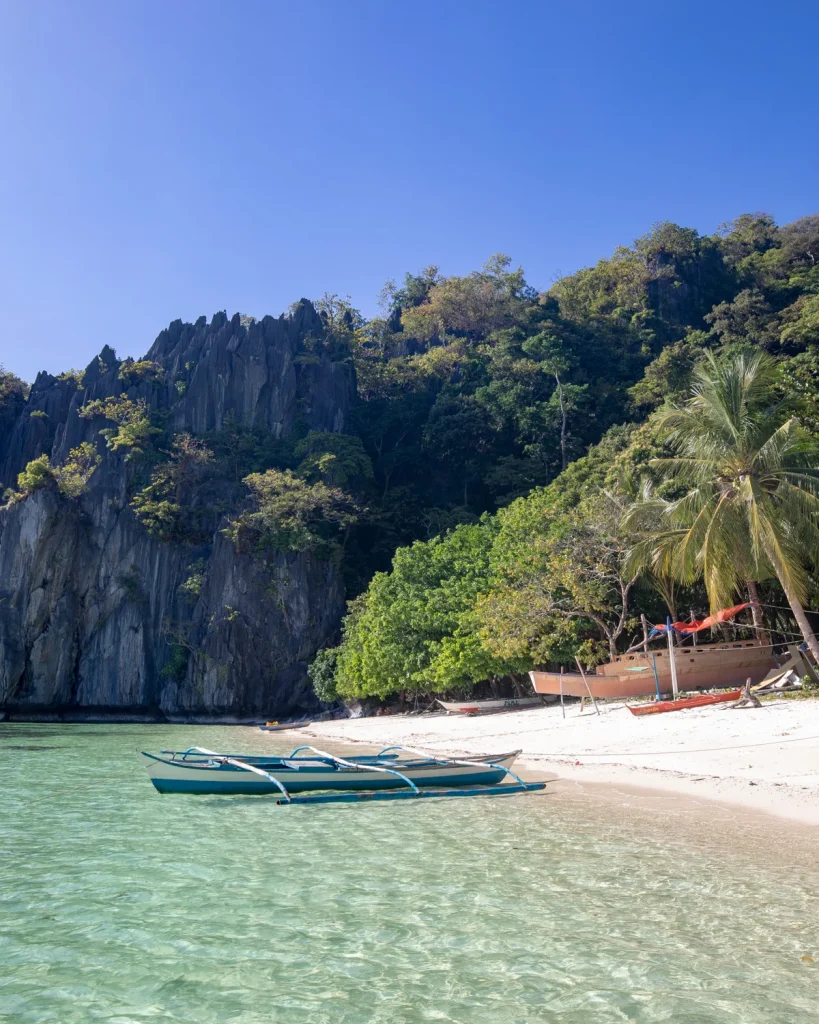
El Nido sits at the northern tip of Palawan island, serving as the gateway to the Bacuit Archipelago — a stunning cluster of around 45 islands and islets scattered across Bacuit Bay. The dramatic karst limestone formations here are over 250 million years old, and the sheer variety of landscapes packed into a small area is what makes El Nido truly world-class.
Conde Nast Traveler has repeatedly ranked Palawan among the best islands in the world, and El Nido is its crown jewel. Whether you’re after adventure, romance, snorkeling, or simply the most beautiful beach you’ve ever seen, El Nido delivers.
What makes El Nido special:
- Dramatic scenery — towering limestone karsts rising straight out of crystal-clear water
- Incredible biodiversity — vibrant coral reefs, sea turtles, monitor lizards, and rare bird species
- Variety — from lively beach bars to completely deserted secret coves, often on the same day
- Island hopping — four different organized tours covering dozens of distinct islands and lagoons
- Accessibility — reachable by direct flight or overland from Puerto Princesa
How to Get to El Nido from Puerto Princesa
Most travelers fly into Puerto Princesa International Airport (PPS), which has the widest range of flights from Manila, Cebu, and other Philippine cities. From Puerto Princesa, El Nido is approximately 230 kilometers north — here are your options:
By Van (Most Popular)
Shared vans depart from the Puerto Princesa bus terminal daily and take roughly 5 to 6 hours. This is the most common route for budget travelers. Book through your accommodation or at the terminal.
Private van hire is also available for a single price for the whole vehicle — ideal for families or groups wanting more flexibility and comfort.
By Air
AirSWIFT operates direct flights between Puerto Princesa and El Nido Airport (ENI) in Lio, cutting travel time to under an hour. Flights are limited and sell out fast during peak season — book well in advance. This is the most convenient option if budget allows.
By Bus
Several bus companies offer the Puerto Princesa to El Nido route. The journey takes 6–8 hours but is the cheapest option.
Pro Tip: Start in Puerto Princesa
Many travelers overlook Puerto Princesa as just a transit stop, but it deserves at least 2 nights of its own. The Puerto Princesa Subterranean River — a UNESCO World Heritage Site — is one of the New 7 Wonders of Nature and is not to be missed. Staying at a vacation rental in Puerto Princesa gives you a comfortable, spacious home base to explore the city’s highlights before heading north to El Nido.
El Nido Island Hopping Tours: A, B, C & D Explained
Island hopping is the heart of any El Nido Palawan travel experience. The local government has organized the surrounding islands into four official tour routes — A, B, C, and D — each visiting different islands and attractions. You can book through your hotel, local tour operators on the main strip, or organized tour companies.
Most tours run 9am–5pm, include lunch, snorkeling equipment, and a boat guide. You can choose between group or private tours.
Tour A — The Classic (Most Popular)
Best for: First-timers, lagoon lovers, dramatic scenery. No El Nido Palawan travel guide would be complete without covering Tour A.
Tour A is the iconic El Nido experience and the one most people picture when they imagine Palawan. It covers the most dramatic spots in the Bacuit Archipelago and is almost always the first tour recommended.
Highlights include:
- Big Lagoon — A vast, emerald-colored lagoon enclosed by towering limestone walls. You enter by kayak (₱200 rental) or swimming. One of the most photographed spots in the Philippines.
- Small Lagoon — Accessed through a narrow opening in the rock, this intimate lagoon feels like a secret world. The water transitions from deep blue to brilliant aquamarine.
- Secret Beach — The most dramatic stop on Tour A. You must dive underwater through a small gap in the rock to emerge inside a hidden beach completely enclosed by limestone cliffs. Absolutely unforgettable.
- Shimizu Island — Known for excellent snorkeling over a diverse, healthy coral reef. A great lunch stop too.
- 7 Commandos Beach — A long, sweeping white sand beach with palm trees and a beach bar. A relaxing final stop before heading back.
Tour B — The Hidden Beaches
Best for: Snorkelers, beach explorers, those seeking quieter spots
Tour B takes you to some of El Nido’s most stunning but less-crowded beaches and snorkeling sites. It tends to have fewer crowds than Tour A, especially in shoulder season.
Highlights include:
- Entalula Beach — A wide, pristine sandbar with excellent swimming and snorkeling on both sides of the beach.
- Pinagbuyutan Island — Dramatic scenery with a long sandy beach fringed by massive karst formations. One of the most beautiful islands in the archipelago.
- Cudugnon Cave — A sea cave with interesting rock formations and a small beach inside. The cave shows signs of ancient habitation dating back thousands of years.
- Cathedral Cave — Only accessible at low tide, this cathedral-like cave is one of El Nido’s most atmospheric spots.
- Snake Island — A narrow sandbar that snakes out across the water, visible from a viewpoint above and perfect for photos.
Tour C — The Far Islands
Best for: Adventurers, nature lovers, those wanting to escape the crowds
Tour C travels further afield to more remote islands in the Bacuit Archipelago. The journey is longer but rewards you with some of the most untouched scenery in El Nido.
Highlights include:
- Helicopter Island — Named for its helicopter-like shape when seen from above, this island has a gorgeous white sand beach and excellent snorkeling.
- Matinloc Shrine — A hilltop shrine with panoramic views over the whole archipelago — the views are worth the climb.
- Matinloc Island Hidden Beach — Accessible through a small crevice in the rock at the right tide, this hidden beach is arguably more dramatic than Tour A’s Secret Beach.
Tapiutan Island — Excellent deep-water snorkeling and crystal-clear visibility. Often included as a floating lunch stop.
Tour D — Mangroves & Caves
Best for: Nature lovers, kayakers, those wanting something different
Tour D is the most unique and “off the beaten path” of the four tours. Instead of open ocean island hopping, this route takes you through dense mangrove forests, hidden rivers, and atmospheric caves.
Highlights include:
- Bukal Island — A mangrove ecosystem teeming with wildlife. Explore by kayak through winding channels under a canopy of mangrove roots.
- Pasandigan Cove — A sheltered, tranquil cove perfect for swimming and snorkeling.
Cadlao Lagoon — The largest island in the Bacuit Archipelago hosts this stunning lagoon surrounded by jungle-covered limestone. - Nature’s Club Beach — A secluded beach with excellent snorkeling and a relaxed atmosphere, rarely crowded.
Best Beaches in El Nido
Beyond the island hopping tours, El Nido has several excellent beaches accessible without a boat.
Nacpan Beach — Every El Nido Palawan travel guide highlights Nacpan Beach for good reason. A 4-kilometer stretch of golden sand, consistently ranked among the best beaches in the Philippines. Nacpan is a 45-minute motorbike ride from El Nido town. The beach is wide, uncrowded (by El Nido standards), and stunning at sunset. Twin beach Calitang is connected at low tide.
Las Cabanas Beach — Just a short tricycle ride from town, Las Cabanas is known for its sunset views and is home to a popular zipline that runs over the water. Great for an easy afternoon outing.
Corong-Corong Beach — A quieter stretch just south of El Nido town popular with locals and travelers seeking a laid-back alternative to the more touristy spots.
Lio Beach — Near the airport, Lio is an upscale eco-tourism development with calm, family-friendly swimming and a collection of boutique resorts and restaurants.
Things to Do in El Nido Beyond Island Hopping
El Nido has more to offer than just boat tours.
Cliff Diving at Duli Beach — A remote beach popular with surfers (November to March) and cliff divers. Accessible by motorbike, the journey is half the adventure.
Scuba Diving — El Nido has some excellent dive sites including shark encounters, dramatic walls, and rich coral ecosystems. Dive shops in town offer PADI courses and fun dives for all experience levels.
Kayaking — Rent a kayak independently and paddle through the mangroves around Corong-Corong or into the smaller lagoons near town.
El Nido Town — The main strip is full of restaurants, bars, and shops. Rizal Street is the heart of it — walk it at sunset, eat fresh seafood, and enjoy the buzzy atmosphere.
Stargazing — Away from light pollution at beaches like Nacpan or Duli, the night sky over El Nido is extraordinary on clear nights.
Cooking Classes — Several local operators offer Filipino cooking classes using fresh market ingredients. A great rainy-day or rest-day activity.
Best Time to Visit El Nido Palawan
El Nido’s weather is dictated by two seasons:
Dry Season (November to May) — One thing every El Nido Palawan travel guide agrees on — visit in dry season. This is peak season, with calm seas, clear skies, and ideal conditions for island hopping and snorkeling. December to March is the sweet spot: consistently sunny, seas are flat, and visibility underwater is at its best. February and March offer the best weather with slightly fewer crowds than the December–January holiday rush.
Wet Season (June to October) — The southwest monsoon (habagat) brings rain and rougher seas, and some island hopping tours may be cancelled due to unsafe conditions. That said, early wet season (June–July) can still have long sunny stretches between showers, and accommodation prices drop significantly.
Shoulder Season tip: April and May are great if you want dry-season weather with slightly smaller crowds. It gets hot — temperatures can hit 35°C — but the sea conditions are excellent.
El Nido Travel Tips & What to Pack
Environmental fees: El Nido charges a tourism environmental fee of ₱200 per person, valid for 10 days. You’ll also pay a Bacuit Bay fee of ₱300 for island hopping tours. Keep your receipts.
Cash is essential: While some larger establishments accept cards, many restaurants, tour operators, and accommodation providers are cash only. Withdraw at ATMs in Puerto Princesa before heading to El Nido, as ATMs in town frequently run out and charge high fees.
Book tours in advance: During peak season (December to March), tours fill up fast. Book at least a day ahead, or pre-book online.
Reef-safe sunscreen only: El Nido strictly enforces a reef-safe sunscreen policy. Standard chemical sunscreens are banned to protect the coral. Buy reef-safe before you arrive.
Use this El Nido Palawan travel guide checklist before you pack.
- Reef-safe sunscreen (SPF 50+)
- Rash guard or UV-protective swim shirt
- Dry bag for electronics on boats
- Underwater camera or waterproof phone case
- Cash in Philippine pesos (₱)
- Light layers for evenings (it cools down)
- Sandals with grip for rocky beaches and caves
- Reusable water bottle (plastic bottles are discouraged)
Where to Stay: Start Your Palawan Adventure in Puerto Princesa
The final stop in any El Nido Palawan travel guide should cover where to base yourself.
Most international and domestic flights to Palawan land at Puerto Princesa International Airport — making it the natural starting point for any Palawan trip. Rather than rushing through, treat Puerto Princesa as a destination in its own right.
Stay at Ocean Dream Villa in Puerto Princesa — a spacious vacation rental that gives you a real home base for exploring the city’s best attractions before heading north. With room to spread out, a fully equipped kitchen, and local knowledge built in, it’s the kind of place that makes your whole trip more relaxed.
From Puerto Princesa, you can explore the Subterranean River (book a day tour), island hop in Honda Bay, visit the Palawan Wildlife Rescue Centre, and explore the city’s excellent restaurants before making the journey up to El Nido refreshed and ready.
Book Ocean Dream Villa Palawan for your Puerto Princesa stay
El Nido Palawan Travel Guide: Quick Reference
| Detail | Info |
|---|---|
| Location | Northern tip of Palawan, Philippines |
| Best time to visit | November–May (dry season) |
| Getting there | Van from Puerto Princesa (5–6 hrs) or AirSWIFT flight |
| Island hopping | Tours A, B, C, D — ₱1,200–₱2,000 per person |
| Currency | Philippine Peso (₱) — bring cash |
| Environmental fee | ₱200 tourism fee + ₱300 Bacuit Bay fee |
| Sunscreen | Reef-safe only — enforced |
| Best beach | Nacpan Beach |
| Must-do tour | Tour A (Big Lagoon, Small Lagoon, Secret Beach) |
El Nido Palawan Travel Guide: Everything You Need to Know
This El Nido Palawan travel guide covers everything you need to plan the trip of a lifetime — turquoise lagoons framed by ancient limestone cliffs, hidden beaches only reachable by boat, and coral reefs teeming with life.
This El Nido Palawan travel guide covers everything you need to plan your trip: the best island hopping tours, top beaches, things to do, when to visit, and how to get there — including how to use Puerto Princesa as your perfect Palawan basecamp before heading north.
Bookmark this El Nido Palawan travel guide before you go.