How to Get to Palawan
There are two main ways of getting to Palawan: flying and sailing.
When flying, arriving at Manila airport (NAIA) on your way to Palawan or other destinations in the Philippines can be stressful if you don’t plan ahead.
When sailing, getting to the passenger departure point in Manila can be challenging, unless you know how to get there.
Check out these tips and tricks for getting to Palawan from Manila.
Don’t forget to check out other helpful tips and tricks for Palawan travel on our Palawan Travel Guide.
Flights to Palawan: Best way to Plan Connecting Flights to Palawan and Beyond
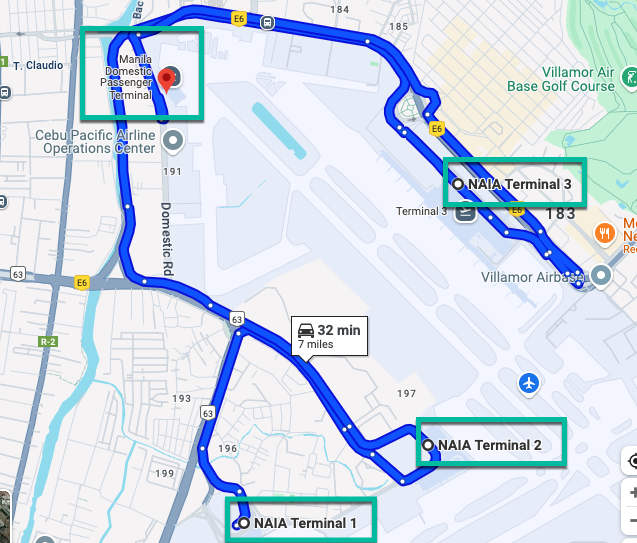
What terminal you arrive at is based on several factors like if your flight is an international flight, a domestic flight or what airline you arrive on. Getting between Manila NAIA terminals for your connecting flight to Palawan can be brutal especially if you’re traveling with a lot of luggage, a large group, of people or kids.
If your international flight and your domestic connection arrive and depart at different terminals, you’ll have a long, stressful trek between terminals. This involves going outside the airport and taking a bus or taxi between the terminals and takes you right through the notoriously bad Manila traffic.
What to Do:
- When flying through Manila, choose domestic flight that departs from the same terminal you arrive at.
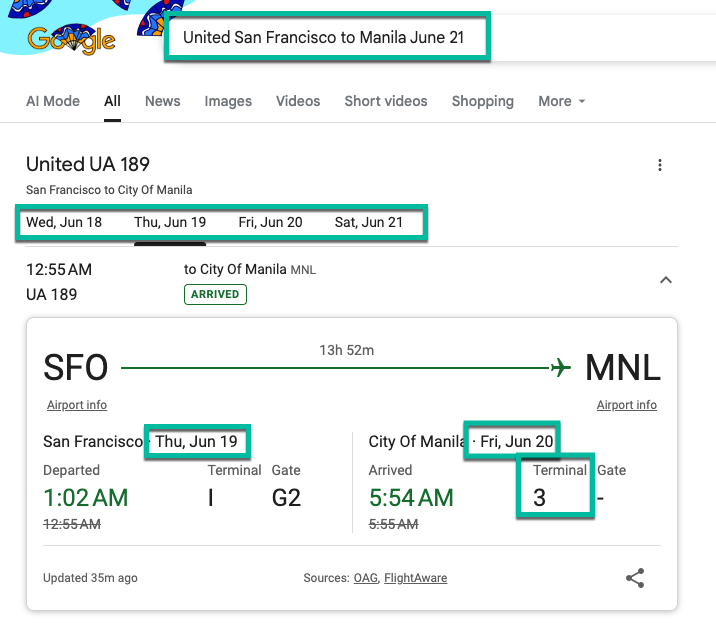
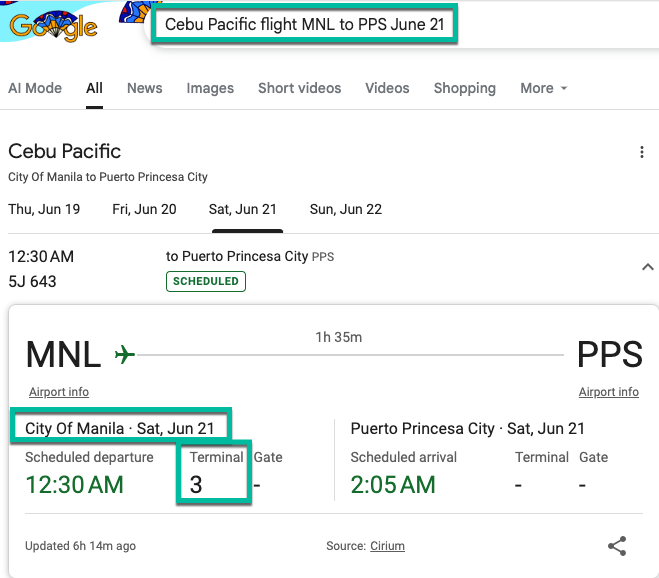
- After getting your flight to Manila, first check what terminal it arrives at, then when choosing a domestic flight to Palawan or other location, check the flight number to see what terminal it departs from.
- Search for your domestic or Palawan flight’s number on Google or other flight tracking sites like FlightStats.com and see the arriving and departing terminals. (see pictures below)
Sail from Manila to Palawan: Take an overnight ship from Manila to Puerto Princesa
Fed up with the stresses of air travel? Take the scenic route from Manila to Puerto Princesa by ship for a more relaxing and scenic option.
Take a ship from Manila to Puerto Princesa from 2GO Travel. Ships have facilities like shops, restaurants, electronics charging stations, and you can enjoy lovely views on your way to Palawan. The Manila to Puerto Princesa ship even makes a stop in Coron, Palawan on its way to Puerto Princesa as well, so even if you’re not stopping there, you can enjoy lovely views of Coron on your way.
The ship takes a relaxed 24-29 hours (depending on the ship) to get to Puerto Princesa, but it’s a completely different experience. Imagine actually enjoying walking around, chatting, and truly enjoying the journey! Probably more fun than going to the airport and being jammed into an airplane for a one-hour flight.
Check out some of the videos on YouTube about their vessel, “MV Masigla.” You can search YouTube for whatever vessel you’ll be on.
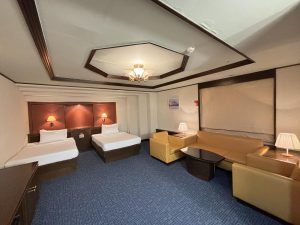
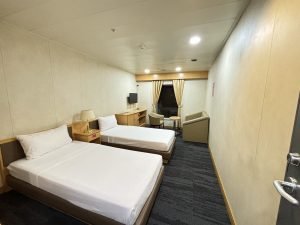
2GO Travel has various classes of service and price levels. These include very basic economy which is a large, shared bunk area with other economy passengers, Business Class, but I recommend spending a bit more for their First class or, “State Room” accommodations.
State Rooms differ by ship, but you’ll typically get a own private room, AC, in-suite bathroom, reading lights, and power outlets. Depending on the ship, you may also get a flat-screen TV, and mini-fridge, and other amenities as well.
Getting to the Harbor for you Trip – The departure point for your ship to Puerto Princesa is in Manila at the Manila North Harbor, Pier 4.
If you arrived at Manila Airport (NAIA) you have a couple of options to get to the harbor. First, there are airport taxis at the taxi stands at the airport, but these are well-known for inflating their prices especially for visitors.
A much better option is to use Grab, a ride sharing app and ride service at the airport. You don’t even need to use the app itself, since Grab has signs and a kiosk right at the airport that can reserve your car for you.
To find the Grab Kiosk, go to baggage claim at Manila Airport and head outside to find the green Grab sign. There, the Grab representative will reserve your ride for you.
Baggage Weight Requirements - Avoid fees and confusion
While many airlines have a strict limit on check-in luggage, it’s not common for airlines to weigh your carry-on luggage as well.
Philippine-based airlines frequently do this, and it can create massive chaos and confusion when checking into a domestic Philippines flight after arriving in Manila on an international flight. In the past, I repacked items in a panic, standing right in front of the ticket agent when checking in.
Before you depart on your flight to Manila, you probably won’t need to weigh your carry-ons on your international flights. If that’s the case, you can focus on the weight of your checked luggage on your way to Manila NAIA.
However, on your domestic flight to Palawan, the weight limits for your carry-on bags is frequently 7kg (15 lbs).
So, I plan about 15 minutes for repacking time before my domestic Philippines flight in order to meet the carry-on weight limits.
For your carry-on item, you typically have the carry-on itself of 15 pounds and a personal item like a handbag, laptop, camera bag, coat, etc.
When repacking, max out those two items then everything else will go in your check-in luggage.
However, check-in luggage also has a strict weight limit. So, if you have heavy items that you will be adding to your check-in luggage, you may exceed the standard weight limit for your check in.
I found that paying for extra check in luggage at the ticket counter at the airport is incredibly expensive for some reason.
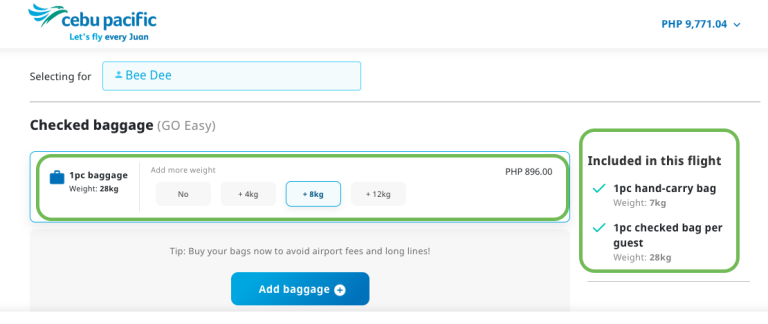
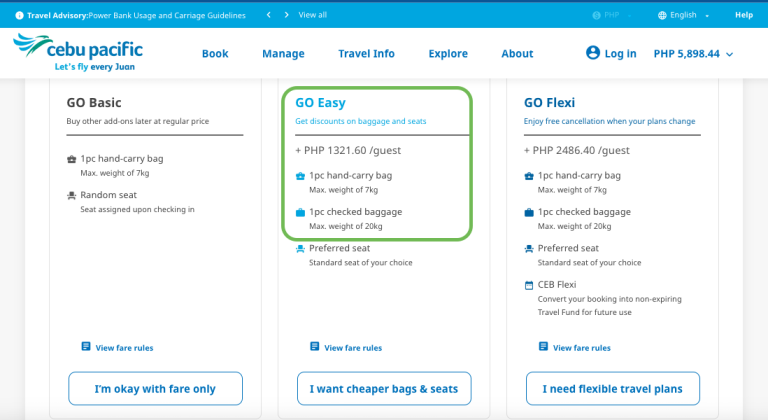
However, adding extra luggage weight when you order your domestic Philippines ticket, or before your trip, is quite inexpensive.
My approach is to figure out what you will put into your check-in luggage in Manila to meeting to the 15-pound carry-on limit. Then pay for extra weight for your check-in luggage when you buy your domestic Philippines ticket.
This small amount of planning will save you a lot of money on outrageously expensive last-minute luggage charges at NAIA, and help you sail easily through to your connecting flight to Palawan.
Options to Rest in Manila before your Flight to Palawan
After a long international flight to Manila, sometimes I want to recharge before flying to Palawan or a final destination in the Philippines.
There are two good options to rest up after you arrive in Manila.
- Wings Transit Lounge at NAIA offers a small, modern, and comfortable place to rest without needing to get to a hotel outside of the airport. Check out their site to see their location and prices.
- Runway Manila is an air-conditioned footbridge that connects the NAIA Terminal 3 directly to Newport City, with an outstanding collection of hotels, restaurants and entertainment. This gives you easy access to hotels, restaurants and amenities without having to take a taxi or a hotel car service. You can find Runway Manila on the web to see if it’s a good option for you.
Get Philippines Pesos at an Airport ATM
While your credit card is useful in the Philippines, cash is still king.
When you arrive in Manila NAIA, plan some time to find an ATM and get cash at a reasonable exchange rate.
Currency exchanges can make huge amounts of profit from you in two ways:
- They typically charge a fee to do a conversation. At least this fee is normally shown to you, so you know what it costs.
- They use a sneaky trick which is to give you a low exchange rate. That is, it’s not the official exchange rate for that day, but a lower rate that lets them keep extra money from conversion.
For this reason, I avoid using currency exchange shops and instead get money from ATMs which at least give you the bank’s exchange rate on your withdrawal. Another reason is that you can take out reasonable amount of money every few days, rather than converting a large sum of money, risking that something will happen to it on your trip.
So, I plan in some time to find and get money from an ATM at the airport, before getting on my domestic flights
Don’t use public USB plugs or Charging wires
USB charging areas are very common in airports and on airplanes themselves.
However, hackers install viruses in the USB outlets themselves, allowing them to hack into any device that is connected and infected USB outlet (Search the web for ways hackers use any public USB outlets in airports as well as on airplanes)
Even public charging wires can be infected or modified by hackers.
I never plug my devices into public USB port but instead bring extra plugs with USB ports on them and a few extra cables, to keep my devices from being hacked.
This will come in handy on long layovers at connecting airports where you will use a lot of battery power waiting for your connecting flight.